
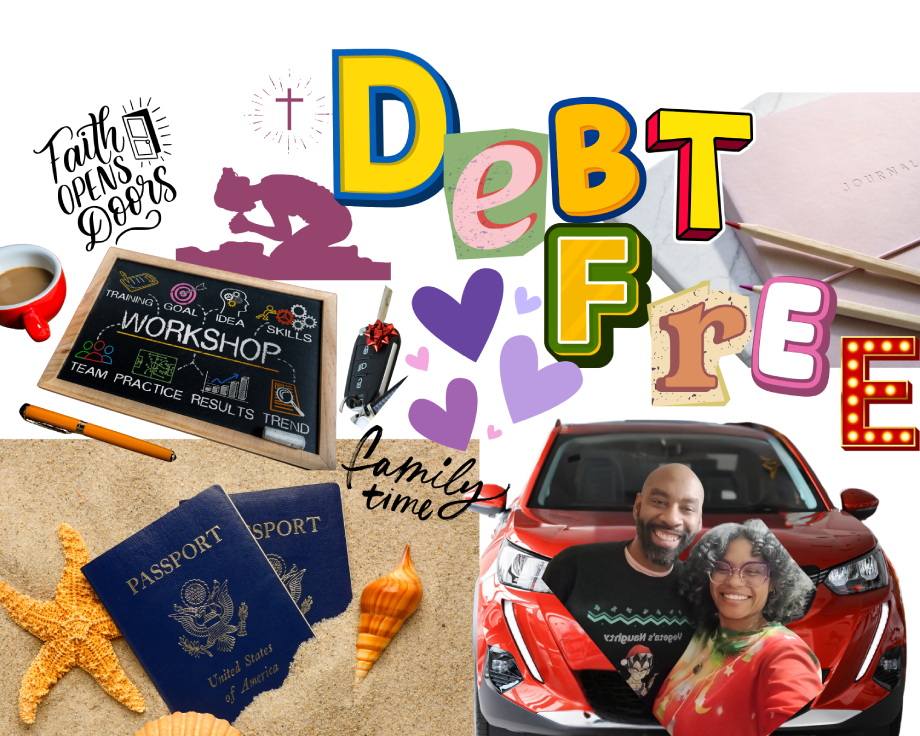
My faith journey took a very real turn at the beginning of this year. I had just started a part-time position at church when I felt a quiet nudge to pause. Not the dramatic kind—more like the kind that makes you stop mid-scroll and say, “Let me think about this.”
I thought about what I believed God was doing in my life and about the vision board I spent weeks saying I wanted to update and hadn’t. I wanted 2025 to be meaningful.
Eventually, the time came for me to stop running and put my thoughts on the vision board. I was more nervous than I cared to admit. I was in a new season in a new role, and I had to get it together. So I sat down, looked through magazines, half excited and half like, “Lord, we really doing this?” This wasn’t about putting pretty things on a board. It’s about wanting to see the results of pairing my faith with intentional actions.
That meant being honest about what I needed, bold enough to ask for help, and willing to move when I didn’t feel fully ready. Looking at my board, I had zero answers on how my vision would come to life. But I did have a desire to try — and that was enough to get started.
My faith journey as seen on my vision board
My 2025 vision board wasn’t an arts-and-crafts project—it was a mirror. I saw what I wanted clearly, but I also saw where I’d been a little lazy. I realized that this stage of my faith journey would require more. Faith alone wasn’t enough in this season; I had to move differently.
It would require me to be:
- Proactive
- Develop a better prayer life.
- Plan better
- Use the tools and resources available to me instead of doing everythang from scratch!
These small intentional decisions would slowly create momentum and shape my year. I just needed to trust the process and stop leaving things on paper so it could show up on my calendar.
What happens when you stop doing it alone?
The first goal I set for my vision board was to host a workshop. I really wanted to do it—but I didn’t want to do it alone. I remembered the experience I had putting on a workshop 2 years earlier, and it was a disaster. And I’ll never do that again.
One day, I’m scrolling on Facebook, and I see a video of my girl Tisha teaching people how to use ChatGPT. I knew she was a tech girlie, but I didn’t realize she was also into AI. What inspired me most about her videos was her confidence. She made AI feel fun, approachable, and easy to talk about.
Watching her teach made me think, “If she can do it, so can I.” I immediately thought about what I put on my vision board and reached out to suggest a collaboration. She loved the idea, and we got to work.
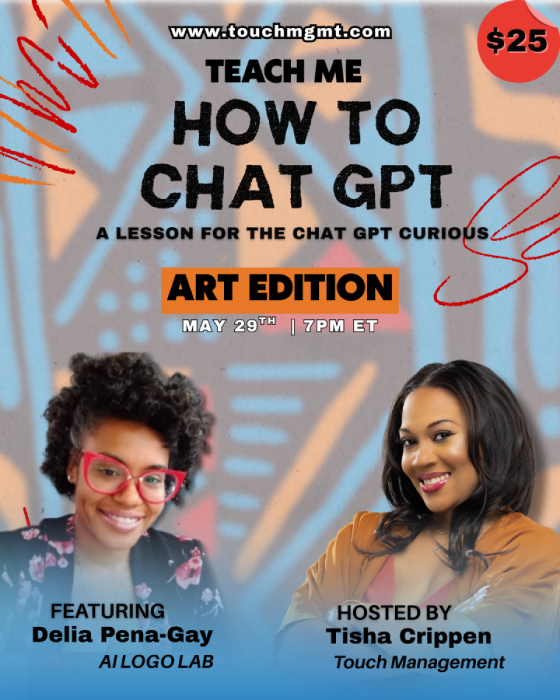
On May 29, Teach Me How to ChatGPT: Art Edition went live! Tisha taught the basics of prompting using her V.I.B.E.S. Method. I taught how to design logo concepts with AI. It was a great experience; Tisha and I’s chemistry as hosts was effortless. We switched roles easily and stayed present with the audience.
I really appreciate your approach to using AI.
– James
The dopest moment came when we learned a guest rearranged his work schedule to attend. He didn’t know us from a can of paint, and he moved his life around for our presentation. It blew my mind knowing he trusted us to show him what was possible with AI. That moment reaffirmed the direction we were heading.
This season of my faith journey is showing me you don’t have to carry everything alone.
Watch a clip of Teach Me How To ChatGPT: Art Edition here
Obedience and intentional actions changed my finances
At the start of 2025, I set clear financial goals. I wanted to pay off two credit card debts and save for a new car. At the time, that felt unrealistic. I worked part-time and assumed I had to sacrifice one goal for the other.
My husband and I drove a ten-year-old VW that constantly broke down. Every repair costs thousands of dollars. This probably doesn’t sound like a big deal, but where I live, a car is a necessity, not a luxury.
Then the car was no longer drivable. We ran out of Plan B’s, so we went seven months without a car. That season humbled us. We relied on our coworkers during the week to get to work, and on family on the weekends to run errands. It was hard, but it showed us what provision looks like when God leads.
Provision requires participation
At the height of our car troubles, Bishop started teaching the biblical principle of tithing. Something clicked for both of us. It felt like we unlocked something spiritually. As we consistently honored God, provision began to show up in different ways. So much that it made us feel like God was making it rain on us. Lol.
I learned how to leverage what I already had and started taking intentional actions in faith. Once I started moving and trusted God, this is how I made so much extra cash to pay my debts and save:
- Co-hosted Teach Me How to ChatGPT: Art Edition workshop.
- I sold sofrito.
- Made sales from my Poshmark store, which I hadn’t touched in over a year.
- Hosted one-on-one coaching calls.
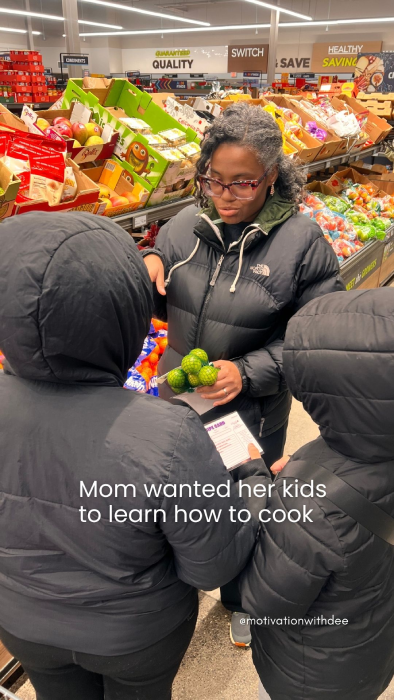
- Led a cooking class that wasn’t on my vision board.
Each move felt simple and together, it changed our finances. Check out the video on How I used ChatGPT To Find A New Car.

While all this is happening to me, my husband started receiving extra bonuses at work. His employer usually gives bonuses only at Christmas. So when one came months earlier, he thought it was a mistake. Then Christmas came, and he received the highest bonus in the office. He had also learned that he had a retirement account with a few coins in it.
The lesson I learned from all this was that my obedience allowed God to multiply in my life. Faith didn’t change my responsibilities; it changed how I saw God.
My next lesson challenged how I showed up for others.
What do you do when leadership gets uncomfortable?
At the beginning of the year, my accountability group began to grow. I was excited to have new faces, and everyone got along. We lived in different places, but shared similar values, goals, and personalities. I felt good about the community I was building. Over time, people started leaving for personal reasons. One of those losses included dismissing the group member I worked with the longest.
Sometimes, letting go is part of the faith journey
I was shocked by the end of the relationship because this was the first time we didn’t see eye to eye. We’ve worked really well together on projects in the past, so I was blind sighted by her reaction to the conflict. With everyone jumping ship, doubt crept in, and I considered shutting the group down altogether.
Then I remembered the assignment and refocused. I still had one person to serve, and as long as she showed up, so would I! All I need is one to keep this group a group.
In the end, I’m grateful for the challenges I had with my accountability group this year because the conflict showed my growth. I stood by the service I provided without being harsh, protected my peace, and owned where I could have done things differently. I believe God removed people to make room for better alignment.
How Do You Know When It’s God’s Way, Not Yours?
My first year working in ministry changed me so much. It changed how I communicate and how I saw leadership. It required more awareness, patience, and humility than I expected. I worked on speaking clearly with love and determining when firmness was necessary.
I learned real quick that Ministry isn’t about you, so there’s little room for careless words or emotional reactions. So, a lot of times, I just turned to my Bible for guidance on how to respond to situations. The Bible story that was on my mind all year was the one about Moses and the golden calf. Reading about the consequences Moses and Aaron faced forced me to do some serious heart checks. I found myself frequently asking myself:
- Why am I responding this way?
- Who am I really serving?
- Is this about expectations or God’s will?
That story reminded me that leading God’s people requires obedience to His word and listening to His voice. This kind of leadership isn’t always comfortable because you have to choose God’s way over your natural reactions. If you’re not careful, you might let the pressure of complaints compromise the instructions you were given.
Wrap Up
2025 taught me something simple: Faith without intentional actions will keep you stuck.
This year, I experienced intentional faith moving through boldness, collaboration, listening, and obedience. My journey isn’t perfect or polished. But it’s purposeful and full of “Lord, we really doing this?” moments. And if there’s one thing I know, it’s this: when belief meets action, God does the rest. Every. Single. Time!
So stay the course! Who else is excited about the new year?
With Love, Light & Grace,
Delia
Thank you for sharing this. It reminded me to trust the process even when I don’t see the full picture yet.
Thank you for reading and sharing that. 🖤 Perspective is key, especially in the waiting. I’m glad this encouraged you—come back and visit again soon!